Crossings and Costumes: What Watching the Queen, and Whiteness Taught Me
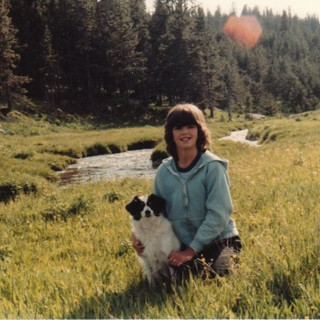
When I was nine years old, the Queen of England came to my hometown in Wyoming. She came quietly as a guest of a local rancher whose sister had married Porchie—the Queen’s longtime friend and horse trainer. She walked down Main Street with the same small grace as my grandmother, who she slightly resembled.
Sheridan was (and still is) a place where prairie life and global pageantry sometimes brush against each other. Horses from our local polo fields have carried royals in matches overseas; ranch hands and aristocrats have shared the same Wyoming sunrise. As a child, I didn’t understand the meaning of these crossings. I just saw a moment where ordinary life and extraordinary myths touched. I assumed it was normal for other kids in rural areas to encounter Kenny Rogers strumming a guitar in an alley as you were sneaking in the back door of the print shop where your mother worked; or to meet C. Thomas Howell and Powers Boothe learning to ride Harley motorcycles for a role and listen as the same mother invites them over for spaghetti; or as a child to meet a local artist only to later find out that she was the daughter of the Doubleday publishing empire who ran away to Wyoming as a young adult.
At the time, it all seemed natural, these brushes with fame, my origin stories that made our little town feel both special and untouched. The world felt full of encounters with interesting people, as if magic could brush up against the ordinary at any moment. I still have the t-shirt Prince handed me as he walked by into the Centennial Theater to premier his movie "Under the Cherry Moon," and that 3-second encounter and brief hand shake led to a life-long admiration for his music.
But as I look back now, I realize there was more happening beneath the surface.
There was a kind of ritual to it all, a careful choreography of hospitality and respectability whenever guests were in town. The town’s pride was real, but so was its silence about things it wanted kept private. I didn’t understand then how those rituals served as both comfort and camouflage, hiding other realities that shaped our lives.
Because even before the Queen’s visit, I remember the old Jim Crow-era signs still visible in a few shop windows downtown, declaring that “no breeds or dogs were allowed.” I noticed, even as a child, how some of the young girls - many just a few years older than me, already mothers or soon to be - stood at the edges of the crowds, never invited to the front to shake hands or be seen by the visiting celebrities.
At the time, I didn’t have words for any of this. To me, it was just the background of growing up, something I noticed, but didn’t question. Like the reality that the only Black faces I saw in town were students playing basketball at the local college, and the way I would be followed around the local Woolworth store while the rich girls stole make-up two aisles away. As a child, you sometimes just accept those things you cannot understand but also cannot change.
But stories also have a way of changing shape as we grow.
Years later, watching Prince Harry and Meghan Markle flee the pressures of monarchy - and the racism braided into its rituals - I recognized something eerily familiar. Whiteness protects itself through ritual and silence no matter where it happens. It turns outsiders into scapegoats. It wraps harm in politeness and calls it duty. What happened in London when Harry's brother reassured his followers, "We're very much not a racist family!" was not foreign to those of us raised in American towns where image and the false stories told to protect it often mattered more than truth. It was the same story, told with a different accent.
Whiteness performs itself everywhere. In my small Wyoming town, it looked like hospitality and frontier pride. In the Windsor family, it looked like lineage and protocol. In both places, it moved as a system designed to preserve itself and punish disruption. This is the heart of whiteness: it protects institutions, not people. It hides itself in respectability. It sanctifies control. It denies harm, even when the bodies of those harmed stand right in front of it and speak. As I remember the Queen’s visit now, I hold both the wonder and the warning. I see how easy it is for a community to celebrate its pageantry and pride, while quietly pushing pain to the margins, asking the inconvenient stories to wait outside, and dressing up exclusion as tradition.
If these past few years of studying the TransVersals of our stories has taught me anything, it’s that healing only begins when we are willing to see what’s beneath the surface, when we are brave enough to remember what ceremony tried to erase, and when we listen for the stories that were always placed in the back of the crowd.

Questions for the Journey When you look back on stories from your childhood or hometown, what “rituals” or silences do you now see differently? What did you notice but not question at the time?
How have you experienced—or witnessed—communities using hospitality, tradition, or “respectability” to hide exclusion or discomfort? What stories were centered, and what or who was kept at the margins?
What are some of the “inconvenient stories” in your family, community, or faith tradition that you think deserve to be brought from the margins to the center? How might healing begin if we remembered them together?
How do you understand the difference between wonder and warning in your own memories? What would it take for your community to hold both honestly?
Further Reading & Quotes
bell hooks, Belonging: A Culture of Place hooks reflects on growing up in a small southern town, interrogating community, exclusion, nostalgia, and the longing for home.
Chimamanda Ngozi Adichie, “The Danger of a Single Story” (TED Talk) A brief, accessible talk about how our communities and memories are shaped by which stories we center and which we silence.


Comments