The Deeper Responsibilities of Relationship: What Comes After Acknowledgment?
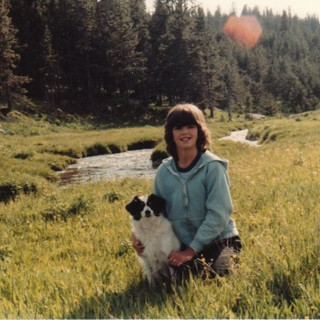
I write this as a descendant of the Mohawk, Lenape, Muscogee, and Siksika peoples.
I do not speak for all Indigenous people or all descendants. No one person can. Our nations are diverse. Our histories are different. Our teachings are not identical. And so, there is no single Indigenous perspective on land acknowledgments.
Look - I know why land acknowledgments exist.
For generations, Indigenous peoples were erased from the story of this continent. Schools taught that Native peoples were part of the past. New maps erased our names and made it seem like this land was empty and open to claim under colonialism. Histories erased our presence because it was convenient to accept that truth, and so entire nations became footnotes.
Land acknowledgments emerged as a corrective to that forgetting.
I just want more of them to name this truth more powerfully - We are still here. We still exist. We still endure and we thrive in spite of 500 years of efforts to erase us.
To be fair, some have worked hard to move beyond older forms of land acknowledgment and to name Indigenous peoples as living nations and living communities. Yet, I continue to hear acknowledgments that remain rooted primarily in the language of the past.
The nations being acknowledged are not historical artifacts. They are living people, and their descendants are alive today. Our cultures continue. Our languages are being spoken and revitalized. Our children are being born, loved, and cared for into adulthood. The real shift is that many of these things are happening hundreds and thousands of miles away from the places where our ancestors did the same because we were rounded up and driven onto reservations so that the land could be taken and owned.
What is essential to remember is that this land is still the homeland of Indigenous peoples. We were displaced. But the vast majority of this land was never willingly ceded or truly sold by our ancestors. In many cases, the story is more complicated than people are taught in history classes. Treaties were often negotiated under coercion, through divided leadership structures, economic pressure, military threats, and governments eager to acquire land. The idea that the land was justly sold is bizarre and misleading; the truth is that our relationship to this land continues, and the story of dispossession is ongoing, not only historical.
Yet, many acknowledgments still only speak in the language of the past:
"We acknowledge the traditional lands of..."
"We recognize that this land once belonged to..."
Once. Was. Formerly.
The words themselves often reinforce the very erasure they seek to challenge - they make this seem like historical wounds when it is actually still happening.
When a overly simple land acknowledgment is given, it loses all connection to its cultural significance and treats the land as a thing of value rather than the history of generations of life and death attached to it. Look at the debates over the sacred Pahá Sápa (Black Hills) and the Niitsíʼpowahsin -Backbone of the World - to the Niitsitapi, the Rocky Mountains to everyone else. They are not over the land - but over the significance to the lives led on the land, both in the past and in the present.
That leads me to the second big issue I am having with modern land acknowledgements.
Many acknowledgements remain trapped inside a colonial understanding of land.
The story often sounds like this: Someone owned the land. Someone else took the land. We acknowledge the previous owners. But for many Indigenous peoples, the deepest wound was never simply a transfer of ownership. It was the replacement of a relationship with possession.
For thousands of years, many cultures around the world understood land not as property but as kin. Human beings belonged to the land, to the earth, and lived in relationship with all the plants and creatures upon it. The land did not belong to them.
European colonization brought a different worldview: ownership, extraction, conquest, and control. Many land acknowledgments unintentionally reinforce that framework by speaking about land primarily in terms of possession which loses the connection to how the land calls to us to live in community with other living beings. And once the land is owned, then the focus turns to defending it from encroachment - exactly what we are seeing with anti-immigration efforts across the United States.
Often missing from contemporary conversations around land acknowledgments is any true understanding of reciprocity, when the goal against others is neither assimilation or extermination - when no one is seeking to claim and conquer the wealth of the land and strip it clean.
My own Niitsitapi traditions offer another lens. There are stories of conflict and warfare between neighboring peoples. Indigenous nations were never perfect. We fought, disagreed, and sometimes harmed one another, because all humans do.
Yet, there are also stories of responsibility beyond victory.
Among the stories carried in the Niitsitapi oral tradition is an account of a neighboring people facing extinction after war left them without surviving men. In the version of the story passed down to me, the people were the Atsina, known today as the A'aninin or Gros Ventre.
Rather than allowing an entire nation to disappear, Niitsitapi leaders chose another path.
Young men were sent to be adopted into the surviving community. They were not sent as conquerors or colonizers, but as new relatives. They took on the responsibilities of husbands, fathers, hunters, and protectors, helping ensure the continuation of the people.
What has always stayed with me in the story is that the goal was not assimilation to make more communities look and act like they were Niitsitapi. The children who followed belonged to the A'aninin people. Their language, traditions, and identity would continue as A'aninin. As a descendant of the people, I carry this story as a lesson about responsibility. Even after conflict and after war, relationship and reciprocity created obligations. The measure of victory was not the elimination of other people because they had different traditions and cultural beliefs. The measure was to ensure that the difference would continue to be, to exist in the large world.
Any relationship creates responsibility. That is what it means to be interdependent. Remembering should not be shallow, but create an obligation. Acknowledgment alone does not accomplish that.
This is why I increasingly wonder whether our wider association and the member congregations in it should move beyond land acknowledgments and toward building deeper practices of reciprocity.
Because I can only imagine the effect if every acknowledgement ended with a commitment.
Imagine how even donating 1% of each GA’s budget back to a local Native-led organization, where it could be used for language revitalization, scholarships for Indigenous students, deeper advocacy work by local tribal nations trying to reclaim the remains of students who died at residential schools, and carry them home to be held by their communities of origin, would change the world and the future of that community.
What if every land acknowledgment came with a commitment to partner with Indigenous communities? Unfortunately, many of the land acknowledgements I continue to hear are more focused on remembrance than reciprocity.
So maybe the question is not whether we should acknowledge the land, but what we do once we do. Because acknowledgement is only a beginning. And when we dig deeper and ask more, some in our spaces may grow uncomfortable. In June of 2027, the General Assembly of the Unitarian Universalist Association will be in San Jose, California.
Many Americans have been taught that slavery was something that happened in the South and ended with the Civil War. Few realize that California entered the Union as a "free state" while simultaneously creating legal systems that allowed the sale, forced labor, and indenture of Indigenous people. As we head west in 2027 to San Jose, maybe it is time to reject that myth once and for all, because we will be walking the land where it happened.
In 1850, during California's first legislative session in San Jose, lawmakers passed the deceptively named "Act for the Government and Protection of Indians." The law allowed Native people to be arrested on vague charges such as vagrancy and then effectively auctioned into unpaid labor if they could not pay fines. Their children and others could be removed from their families and bound into years of involuntary service with no cause, except their being Indigenous. Many children were sold into sexual slavery through this system (and it also happened in other states). Native people were also prohibited from testifying against white settlers in court, making legal challenges nearly impossible.
For Indigenous communities in the Santa Clara Valley and throughout California, the end of Spanish mission control did not bring freedom. It was followed by new systems of state-sanctioned exploitation, dispossession, and violence. The forced labor provisions remained in effect until the post-Civil War era, while discriminatory elements of the law persisted for decades afterward, until being removed as legal in 1937.
This history matters because land acknowledgments often speak of Indigenous loss without naming the systems that produced it. The land was not simply "taken" in some distant past. Laws were written that allowed children to be trafficked, labor was stolen, and communities were deliberately dismantled. If we are committed to remembrance, we must be willing to tell the truth about how that history unfolded.
And maybe instead of land acknowledgments, the UUA and our spaces, including GA, could lean into developing deeper commitments and rituals beyond just acknowledgements. Here is one I like to use instead of a simple acknowledgment.

Ritual of Remembrance:
Leader: We gather today in a place shaped by countless generations of human and more-than-human life.
People: No place is empty. No place is without memory.
Leader: We remember the Indigenous peoples of this place and their descendants who remain among us today.
People: The land remembers their footsteps. The rivers remember their names. The air carries their voices in the wind. The trees watch and remember those whose footsteps faded and with them the protection of the land.
Leader: We remember the attempts to erase them: the taking of land and the resources that fed and clothed them, the taking of children and with them the future, the taking of language and with it the connection to the past, and the taking of lives, too many lives.
People: And still, the people remain. Carrying names that were nearly lost. Carrying songs that were nearly silenced.
Leader: We remember those displaced, enslaved, excluded, exploited, and erased. We remember the laborers, migrants, refugees, and all whose stories are woven into this place.
People: We refuse histories that make some people visible and others invisible.
Leader: We remember that this land carries stories of beauty and violence, belonging and exclusion, covenant and betrayal, survival and renewal.
People: We refuse the forgetting.
Leader: We remember that history is not over.
People: The children are still being buried. And reburied. The rivers are still being poisoned. The poor are still being displaced and shamed for their poverty. The powerful are still deciding whose stories matter.
Leader: We remember that the past is not yet the past.
People: It lives in stolen wealth and underfunded schools. In reservations and redlined neighborhoods. In missing languages and missing people. In the denial of historic gender and sexuality and family. In who is safe and who is not.
Leader: We remember that the past did not and does not just disappear.
People: It lives in what was taken and never returned. In communities still carrying losses they did not choose. And in advantages some inherit that burden left on others who descend from ancestors whose blood and bones funded those inheritances.
Leader: As part of this gathering, we commit ourselves to more than remembrance.
People: We will share resources. We will build relationships. We will support the work that Indigenous communities ask us to support.
Leader: We will not mistake awareness for action.
People: We will not mistake gratitude for reciprocity.
Leader: Today's offering, partnership, or act of service is one small step toward living up to the commitments we have spoken about.
People: May our actions carry the weight of our words.
All:
What we remember should change how we live. Otherwise, remembrance is only performance.
What we know should change what we do. Otherwise, acknowledgement is only decoration.
What we inherit should shape what we give. Otherwise, gratitude is only another form of taking.
(pause)
Leader: May we leave this place more accountable than we arrived. May our relationships be deeper than our statements. May our actions carry the weight of our words. Eh-eh, Amen, AsePS: As a suggestion to congregations - using this monthly or quarterly and giving a set percentage or share the plate offering for that Sunday would be a great partner action to weekly acknowledgements, which could be reframed to name the way your community partners with others.
@kfr 2026


Comments